
A Young Man
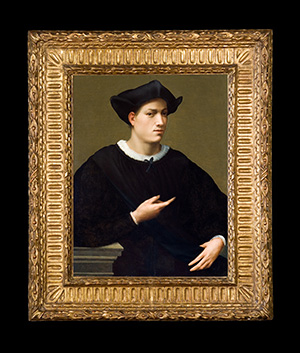


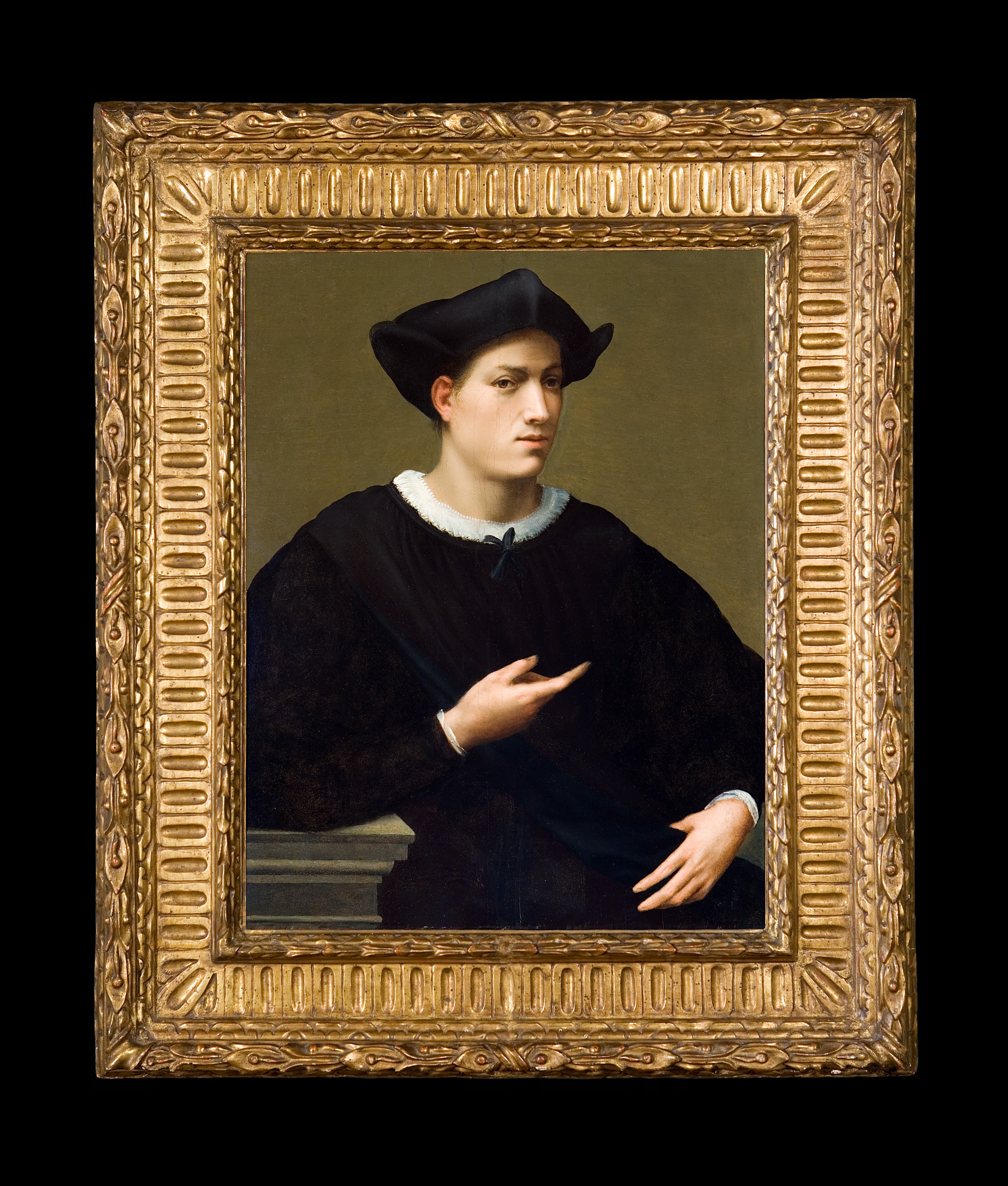
A Young Man
- Artist
- Franciabigio
- Artist Dates
- 1482-1525
- Artist Nationality
- Italian
- Title
- A Young Man
- Date
- c. 1520
- Medium
- oil on panel
- Dimensions
- 79.1 x 60.8 cm (31-1/8 x 23-7/8 in)
- K Number
- K212
- Repository
- Philbrook Museum of Art
- Accession Number
- 1961.9.8
- Notes
Provenance
Barberini Collection, Rome, in 1925. [1] (Count Alessandro Contini Bonacossi [1878-1955], Rome-Florence); sold to Samuel H. Kress [1863-1955] on 4 March 1932; gift to National Gallery of Art in 1939; deaccessioned in 1952 and returned to the Samuel H. Kress Foundation; gift 1961 to Philbrook Museum of Art, Tulsa, no. 1961.9.8. [1] Adolfo Venturi, Storia dell’arte italiana, 11 vols, Milan, 1901-1940, volume IX part 1, p. 452.
Catalogue Entry
Franciabigio
A Young Man
K212
Tulsa, Okla., Philbrook Art Center (3350), since 1953.(1) Wood. 31 1/8 X 23 7/8 in. (79.1 X 60.8 cm.). Fair condition; some restoration; cleaned 1953. Generally accepted as by Franciabigio, K212 is dated stylistically about 1520.(2) It has been cited for its preservation of the subtle play of light and shade which time has gravely impaired in other portraits by the artist.(3) Provenance: Barberini, Rome (1925). Contini Bonacossi, Florence. Kress acquisition, 1932 – exhibited: 'Italian Paintings Lent by Mr. Samuel H. Kress,' Oct. 1932, Atlanta, Ga., through June 1935, Charlotte, N.C., p. 23 of catalogue, as Franciabigio; 'Italian Renaissance Portraits,' Knoedler's, New York, Mar. 18-Apr. 6, 1940, no. 16 of catalogue, as Franciabigio; National Gallery of Art, Washington, D.C. (210), 1941-52.(4)
References
(1) Catalogue by W. E. Suida, 1953, p. 50, as Franciabigio. (2) K212 has been attributed to Franciabigio by G. Fiocco, R. Longhi, R. van Marle, F. M. Perkins (in ms. opinions), A. Venturi (Storia dell'arte italian a, vol. IX, pt. I, 1925, p. 452), and F. S. Santoro (in Paragone, no. 163, 1963, p. 14). B. Berenson formerly (Italian Pictures of the Renaissance, 1932, p. 210; Italian ed., 1936, p. 181) attributed it to Franciabigio, but recently (Italian Pictures ... Florentine School, vol. I, 1963, p. 208) he has listed it tentatively as Tommaso di Stefano Lunetti, a suggestion which deserves further consideration. (3) Santoro (loc. cit. in note 2, above). (4) Preliminary Catalogue, 1941, p. 68, as Franciabigio.